Why Does My Jaw Feel Sore Months After a Dental Implant?
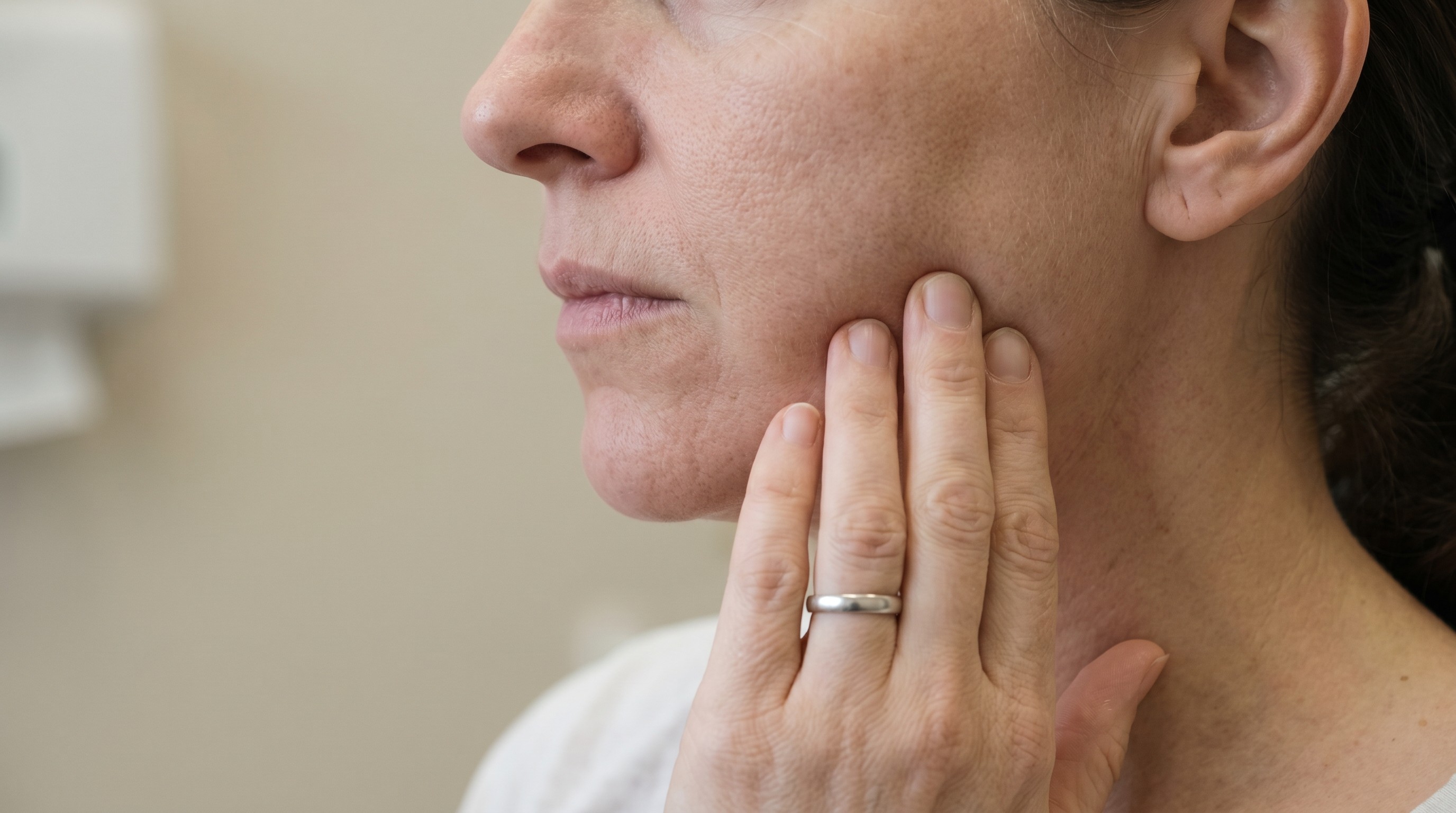
Mild jaw tightness can linger for a few weeks after an implant heals, but soreness that persists or worsens beyond two to three months usually points to a fixable cause. Most often it's a slightly high bite, nighttime clenching, or early peri-implantitis. A quick bite check and X-ray at Line Dental Aloha typically identifies the issue.
We see this question a lot. A patient invests in a single implant, the surgery goes smoothly, the crown goes on, and life moves on. Then four months later, the jaw still feels off. Not painful exactly. Just tired. Tight. Something.
That feeling deserves a real answer, not reassurance.
Is it normal to feel jaw soreness months after a dental implant?
Some residual tightness is normal. Soft tissue heals within about two weeks, but the bone bonding to the implant, a process called osseointegration, typically takes three to six months depending on bone quality and implant location, according to the American Academy of Implant Dentistry. During that window, your jaw is quietly re-learning how to distribute chewing force across a new tooth.
What is not normal: soreness that gets worse, radiates toward the ear, or wakes you up. If you're past the eight to twelve week mark and the discomfort is climbing instead of fading, something mechanical or biological is off. That's worth a phone call.
What causes lingering jaw pain after the implant has healed?
In our office in Aloha, five causes account for almost every late implant complaint:
A high bite. The crown sits a fraction of a millimeter too tall, so it hits first every time you close. Over weeks, that overload travels into the jaw joint and muscles.
Peri-implantitis. Bacterial inflammation around the implant. The American Academy of Periodontology describes it as an inflammatory condition affecting the soft and hard tissues around a dental implant that can lead to progressive bone loss if untreated.
Nerve irritation. Lower-jaw implants sit close to the inferior alveolar nerve. AAOMS notes that injury to this nerve is uncommon but recognized, with symptoms including persistent numbness or tingling in the lower lip and chin.
Bruxism. Nighttime clenching can multiply the load on an implant several times over. Research published in the Journal of Oral Implantology identifies occlusal overload from a high crown or untreated bruxism as a risk factor for bone loss and prosthetic failure.
Referred pain from a neighbor. Sometimes the implant is fine and the tooth next door has a cracked filling. The brain is bad at locating dental pain.
A software engineer who commutes from the Intel Hillsboro campus came in last spring, eleven weeks post-implant, convinced the implant had failed. It hadn't. Her crown was 60 microns high. Two minutes with articulating paper, a quick polish, and the ache was gone by the weekend.
Pain months after an implant is almost never the implant rejecting you. It's a signal, and signals are fixable.
How can I tell if my discomfort needs urgent attention?
Use this quick self-check before you call.
Call same day if you notice:
Swelling, pus, or bleeding around the implant
Fever
Numbness or tingling in your lip or chin
Pain that is climbing day over day
Call within the week if:
Pain only shows up when you bite on one specific food (classic high-bite pattern)
You wake up with a sore jaw but it eases by lunch (likely grinding)
The ache is intermittent and dull but never fully leaves
Watch and wait a few days if:
You're under twelve weeks out and the tightness is improving week to week
When in doubt, call. Bite adjustments take five minutes when caught early. They take much longer once the jaw muscles have spent weeks compensating.
What will the dentist actually do to diagnose it?
At Line Dental Aloha, the workup for late implant soreness is usually quick and noninvasive.
First, articulating paper. You bite down on thin colored film, and the high spots show up as dark marks on the crown. If your implant crown is overloaded, this finds it in under a minute.
Second, imaging. A periapical X-ray or, when needed, a 3D CBCT scan to check bone levels around the implant. Steady bone height means the implant itself is healthy. Bone loss in a crater shape around the neck of the implant points toward peri-implantitis.
Third, probing. We measure the depth of the gum cuff around the implant the same way we measure pockets around natural teeth. Deeper readings combined with bleeding signal inflammation.
Fourth, a conversation about your nights. If you grind or clench, an occlusal night guard is often the single highest-leverage fix. The American Dental Association notes that routine professional hygiene and good home care reduce the risk of peri-implant disease, and a night guard adds mechanical protection on top of that.
How can Aloha patients prevent long-term implant problems?
Most late implant trouble is preventable with four habits:
Twice-yearly hygiene visits using implant-safe instruments. Implants need different scalers than natural teeth. Make sure your hygienist knows you have one.
A custom night guard if you clench. We see a lot of this in patients commuting the Highway 217 corridor between Nike World Headquarters and Intel. Desk-job stress shows up in jaw muscles.
A daily water flosser aimed at the gumline around the implant. String floss can be tricky around implant crowns. Water reaches what floss misses.
Call early. Truly. A bite adjustment caught at week ten is a five-minute visit. The same problem at month eight has often caused bone changes that take real work to reverse.
That's the whole prevention playbook.
For patients across Aloha, Beaverton, and Hillsboro, we keep follow-up appointments short and direct. You shouldn't have to wonder whether your jaw is healing the way it should. A ten-minute check answers that.
Frequently Asked Questions
How long does jaw soreness normally last after a dental implant?
Soft tissue soreness usually resolves within two weeks. A vague tightness during chewing can linger for six to twelve weeks as your jaw adapts to the new load. Past three months, soreness that is steady or worsening is not part of normal healing and should be evaluated.
Can a high bite on an implant crown cause jaw pain?
Yes, and it's one of the most common causes we see. Natural teeth have a tiny ligament that lets them shift slightly under pressure. Implants do not. If the crown sits even a fraction too tall, your jaw absorbs the extra force every time you close. A simple bite adjustment usually resolves it the same day.
What does peri-implantitis feel like?
Early on, often very little. You may notice tender or puffy gums around the implant, a metallic taste, slight bleeding when you brush, or a dull ache that comes and goes. Because symptoms are subtle, regular hygiene visits with X-rays are the most reliable way to catch it before bone loss progresses.
Should I worry about numbness in my lip after a lower implant?
Yes, call the office the same day. Persistent numbness or tingling in the lower lip or chin after a mandibular implant can indicate inferior alveolar nerve irritation. The sooner it is assessed, the better the chance of full recovery.
Will a night guard help protect my implant?
If you clench or grind, absolutely. A custom night guard distributes biting force across all of your teeth instead of concentrating it on the implant. For patients with high-stress jobs at Intel, Nike, or other employers along the TV Highway corridor, it's one of the most cost-effective things you can do to extend the life of an implant.
If your jaw still feels off months after an implant, don't sit on it. Call Line Dental Aloha at (503) 259-8641 or stop by 18425 SW Alexander St. We'll find the cause, fix what's fixable, and get you back to forgetting the implant is even there.
Schedule Your Visit Today
At Line Dental, we understand that patients may have many questions before scheduling an appointment or visiting our office. Below are answers to some of the most frequently asked questions. If you have additional inquiries, please feel free to contact us at 503-259-8641 or via our online form.