Single Tooth Implant vs Bridge: Which One Actually Lasts Longer?
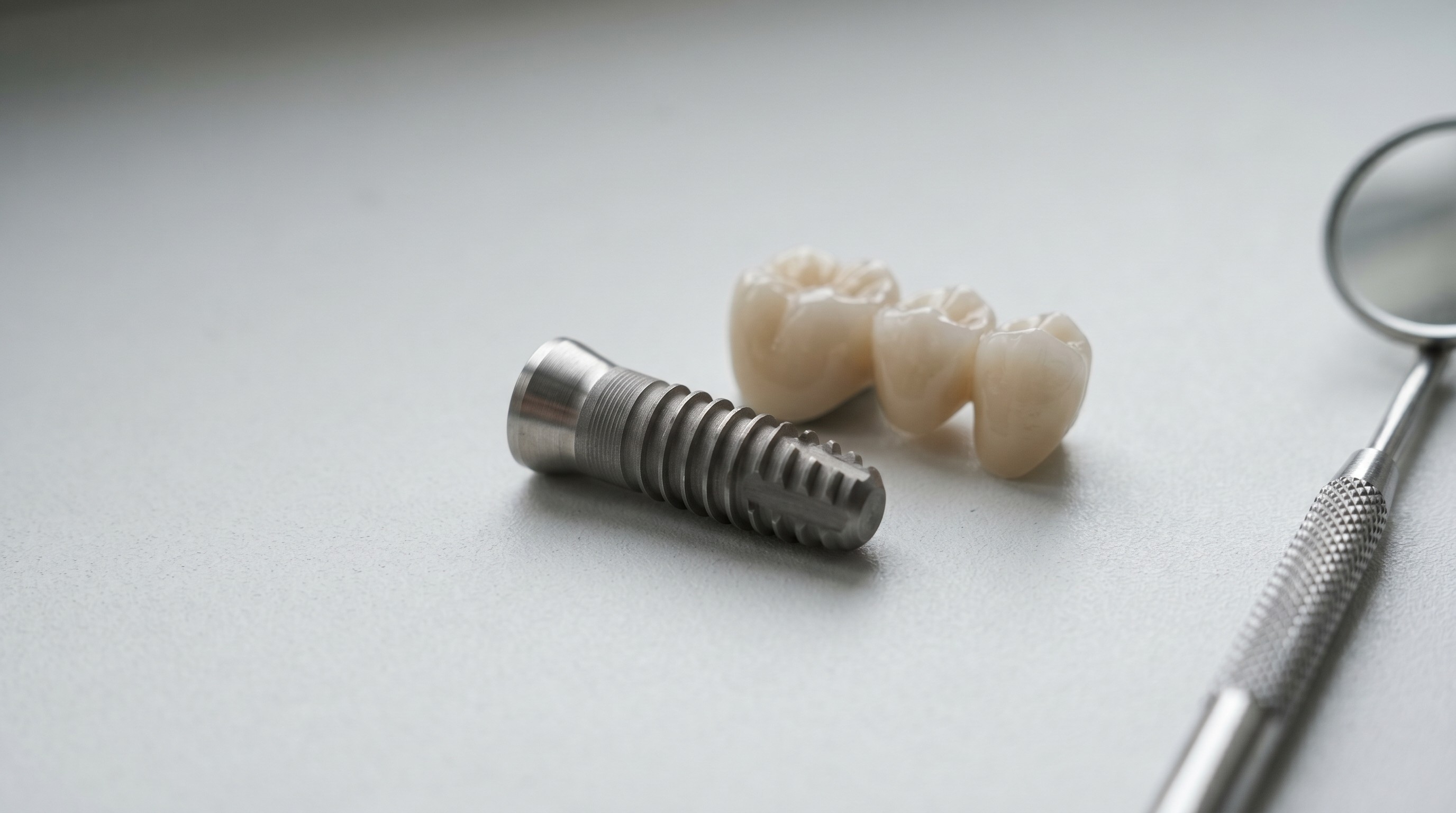
A single dental implant typically lasts longer than a traditional bridge. Implants show roughly 95% survival at 10 years and often last decades, while fixed bridges usually need replacement every 10 to 15 years. Implants also preserve jawbone and leave neighboring teeth untouched, which a bridge cannot do.
At Line Dental Aloha, we get this question almost every week. A Nike product manager came in last month after cracking a molar on a hike near Cooper Mountain. He wanted to know the same thing most of our patients in their 30s and 40s want to know. What's going to hold up best over the next twenty or thirty years?
Here's the honest answer, without the sales pitch.
What's actually different about an implant vs a bridge?
A dental implant is a titanium post placed into the jawbone, with a custom crown on top. It replaces both the root and the visible tooth. It stands on its own. It doesn't touch the teeth next to it.
A traditional bridge works differently. We shape down the two teeth on either side of the gap, place crowns over them, and suspend a fake tooth in the middle. Those neighboring teeth become anchors. According to the American Dental Association, preparing a tooth for a bridge requires removing enamel from the adjacent abutment teeth. That enamel doesn't grow back.
That's the core tradeoff. One option leaves your healthy teeth alone. The other uses them as support.
How long does each option actually last?
This is where the numbers get interesting. Peer-reviewed implant survival studies put dental implants at roughly 95% survival at 10 years in healthy patients. Many implant posts stay functional for decades. The crown on top may need replacement at some point, but the post itself often outlives the dentist who placed it.
Bridges tell a different story. The ADA notes that traditional fixed bridges typically last 10 to 15 years before needing replacement. Cochrane Reviews on fixed prosthodontics point to secondary decay on the anchor teeth as a leading cause of bridge failure. The fake tooth in the middle isn't usually the problem. The supporting teeth are.
So when a bridge fails, you're often not just replacing the bridge. You may also be treating decay or root canals on teeth that were healthy before the original bridge went in.
One option ages well. The other tends to compound.
What happens to your jawbone with each choice?
This part doesn't get discussed enough. When a tooth root is removed and not replaced, the bone underneath starts to resorb. Research from the NIDCR and oral surgery literature shows alveolar ridge resorption begins within months of tooth loss.
An implant transmits chewing force into the bone the same way a natural root does. The bone stays stimulated. It holds its shape.
A bridge sits above the gum. It restores chewing on the surface, but the bone underneath the missing tooth keeps shrinking. Over 10 or 20 years, that change can become visible. Facial contour shifts. The gumline under the bridge develops a hollow. Future treatment gets harder, because there's less bone to work with if you ever decide to switch to an implant.
For a patient in their late 30s with four or five more decades of chewing ahead, this matters.
Comparing cost over 20 years, not just day one
A bridge is cheaper upfront. In our office, it's often roughly half the cost of an implant on day one. That's real money, especially for younger patients early in their careers.
But day one isn't the whole picture. If a bridge lasts 12 years on average, a patient who gets one at 35 will likely replace it around 47, and possibly again near 60. Each replacement may include additional treatment on the anchor teeth.
An implant placed once, properly, often becomes a one-time investment. The math changes when you stretch the timeline.
Insurance is the wildcard. Many PPO plans cover bridges more readily than implants, which can shift the short-term calculation. We verify benefits during your first visit and walk through what your specific plan covers before any treatment starts.
One option leaves your healthy teeth alone. The other uses them as support.
When a bridge still makes more sense
We don't push implants on everyone. A bridge can be the right call in real situations.
The bone in the area has resorbed significantly and the patient declines grafting.
The teeth on either side of the gap already need crowns for other reasons. Using them as anchors becomes efficient.
Certain medical conditions complicate implant surgery or healing.
The timeline matters. A bridge can be finished in a few weeks. An implant often takes three to six months from start to finish because the bone needs to integrate with the post.
For a Hillsboro patient heading into a long deployment, or an Intel engineer with a wedding in eight weeks, the timeline alone can decide it.
Both options work. Neither is wrong. The right answer depends on your bone, your budget, your timeline, and how long you plan to keep using these teeth.
Frequently Asked Questions
Is a dental implant worth the extra cost over a bridge?
For most patients under 60 in good general health, yes. The longer lifespan, bone preservation, and not having to grind down neighboring teeth usually outweigh the higher upfront cost when you look at a 20-year horizon. For patients with specific medical or bone limitations, a bridge can be the smarter call.
Can a bridge be replaced with an implant later?
Often, yes, but it can get harder over time. The bone under the missing tooth has been resorbing the entire time the bridge was in place. If you wait 15 years to switch, you may need bone grafting first. Patients who think they may eventually want an implant should weigh that before committing to a bridge.
Does insurance cover implants or bridges better?
Most PPO plans we work with cover bridges more readily than implants, though implant coverage has improved in recent years. During your first visit at Line Dental Aloha, our team verifies your specific benefits and gives you a written breakdown before any treatment begins.
How long does each procedure take from start to finish?
A bridge usually takes two to three weeks across two appointments. An implant takes three to six months total, because the titanium post needs time to integrate with the jawbone before the final crown is placed. The actual chair time isn't that different. The healing time is.
Will a bridge damage my healthy teeth?
Preparing a bridge permanently removes enamel from the two anchor teeth. That enamel doesn't regenerate. The anchor teeth also carry extra chewing load and are more vulnerable to decay along the crown margins, which is why Cochrane reviews point to abutment decay as a top cause of bridge failure. An implant avoids this entirely.
If you're weighing a single tooth replacement and want a straight answer about which option fits your situation, call Line Dental Aloha at (503) 259-8641. We'll look at your bone, your bite, your timeline, and your insurance, then walk you through both paths honestly. We're at 18425 SW Alexander St, easy to reach from Highway 217 and TV Highway whether you're coming from the Intel Hillsboro campus or the Nike Beaverton offices.
Schedule Your Visit Today
At Line Dental, we understand that patients may have many questions before scheduling an appointment or visiting our office. Below are answers to some of the most frequently asked questions. If you have additional inquiries, please feel free to contact us at 503-259-8641 or via our online form.