Am I a Good Candidate for Dental Implants? Key Factors to Know
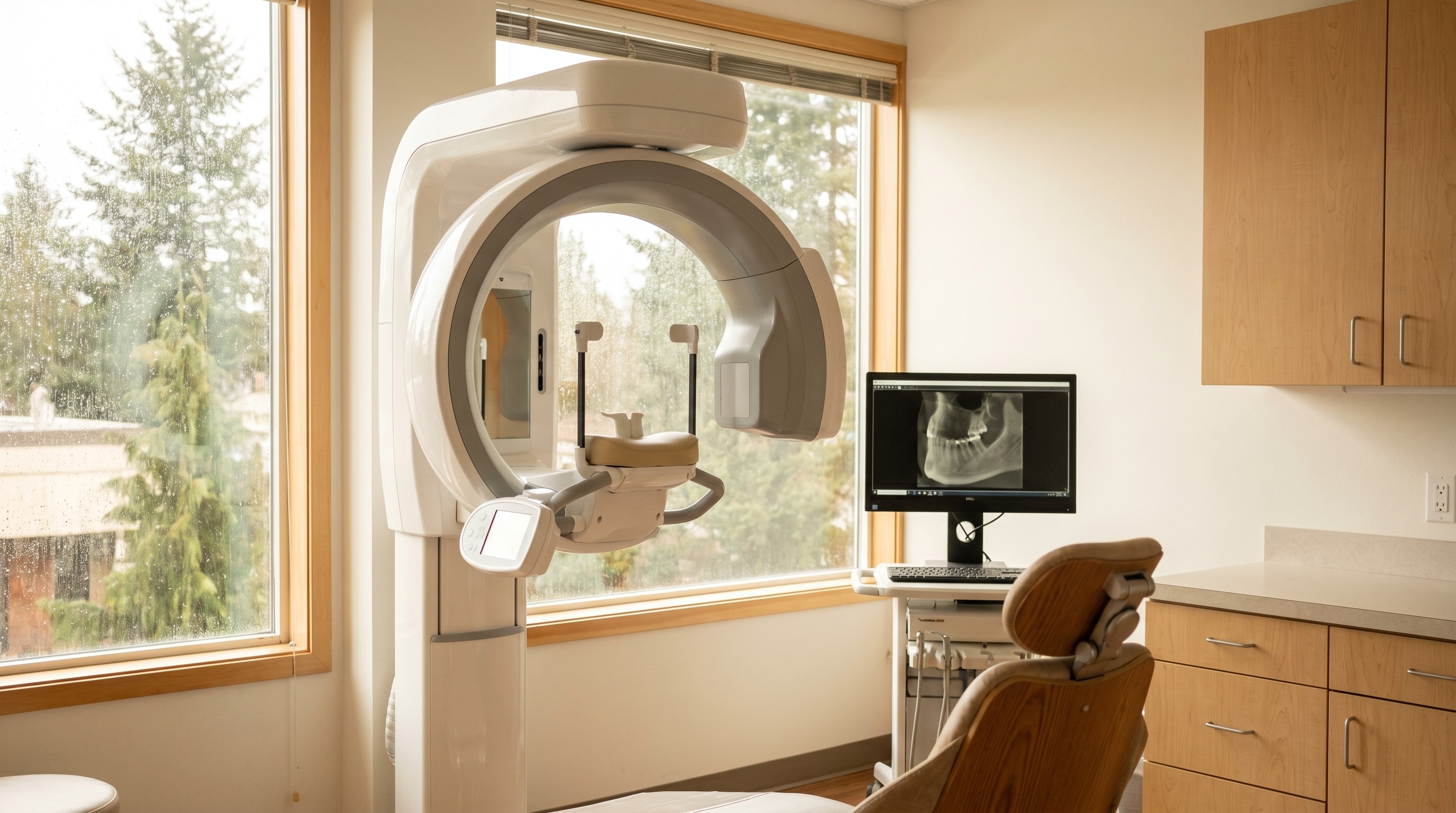
Most healthy adults are candidates for dental implants. The key requirements are sufficient jawbone to support the post, healthy gums, and good overall health. Smokers, patients with uncontrolled diabetes, or those on certain medications may need additional planning. A 3D scan and consultation at Line Dental Aloha confirms candidacy in one visit.
That's the honest short answer. The longer answer depends on a handful of factors we can measure in about thirty minutes. We see this question constantly from Intel and Nike professionals on the Highway 26 corridor who've been quietly avoiding a missing molar for years. They want to know if it's even worth booking a consult.
It almost always is. Here's why.
What makes someone a good candidate for dental implants?
The titanium post that anchors an implant needs bone to fuse with. That's the whole trick. So when we evaluate a candidate, we're really looking at five things:
Jawbone volume and density at the implant site, measured with a 3D scan
Healthy gum tissue with no active periodontal disease
General health good enough to heal normally after minor surgery
Non-smoking status, or willingness to pause during healing
Commitment to home care and follow-up visits
According to the American Academy of Implant Dentistry, dental implants have a long-term success rate of roughly 95% in healthy patients. That number is one of the highest in all of dentistry. It also assumes the patient was actually a good candidate to begin with, which is exactly what the consultation is designed to confirm.
Which medical conditions can affect implant candidacy?
Some health conditions don't disqualify you. They just change the planning. The ones we ask about most carefully:
Uncontrolled diabetes. Per the ADA and NIDCR, poorly managed blood sugar is linked to delayed healing and higher implant failure rates. Well-controlled diabetes (a stable A1C) is usually fine.
Active cancer treatment, especially head and neck radiation, which affects how bone heals.
Bisphosphonate medications commonly prescribed for osteoporosis. Some forms carry risk; others don't.
Autoimmune conditions or long-term steroid use that suppresses healing.
Blood thinners, which we coordinate around but rarely stop entirely.
Disclose everything at the consult. Even the supplement you started last month. We've had patients in their 70s sail through implant surgery and patients in their 30s who needed extra planning because of one medication. Age matters less than health.
What if I don't have enough bone for an implant?
This is the most common candidacy question we get, and the answer is reassuring. Bone loss starts almost immediately after a tooth is extracted. The American Association of Oral and Maxillofacial Surgeons notes that significant resorption begins within months when a site goes unrestored. So if you lost a molar five years ago, yes, the bone has likely shrunk.
That doesn't mean implants are off the table. It usually means one extra step:
Bone grafting rebuilds the site over three to six months before the implant is placed.
Sinus lifts add bone height for upper back teeth where the sinus floor sits low.
Immediate placement sometimes works if you're getting an extraction and implant together, preserving the existing bone.
We use cone-beam CT imaging to map your exact bone volume in three dimensions. The American Academy of Oral and Maxillofacial Radiology considers this the standard for implant planning. A flat X-ray can't show what we need to see. The 3D scan can.
Are smokers and vapers candidates for dental implants?
Yes, but with a serious conversation first. Research published in the Journal of Dental Research and summarized in Cochrane Reviews shows smoking roughly doubles the risk of implant failure. Nicotine restricts blood flow to the gums and bone, and healing tissue needs that blood flow.
We typically ask patients to stop smoking at least two weeks before surgery and eight weeks after. That window covers the critical early healing phase where the implant either integrates with the bone or doesn't.
Vaping isn't a safe substitute. Nicotine is nicotine, regardless of the delivery method. If quitting feels impossible, tell us. We'd rather plan around honesty than be surprised by it.
Age matters less than health. We've placed implants in patients in their 80s who heal beautifully and declined cases in patients in their 40s who needed something else first.
What to expect at your implant consultation in Aloha
A consult at Line Dental Aloha takes about an hour. Here's what happens:
3D cone-beam scan of the implant area to measure bone volume and locate nerves and sinuses
Full oral exam checking gum health, bite, and any neighboring teeth that need work first
Medical history and medication review, including supplements
Treatment plan with timeline, materials, and clear cost breakdown
Options discussion: single implant, multiple implants, implant-supported bridge, or full-mouth restoration
A Nike engineer who lives near Cooper Mountain came in last spring after losing a lower molar to a cracked filling. He'd assumed he needed a graft and was bracing for a year-long process. The cone-beam scan showed his bone was still intact. He had the implant placed within three weeks. That's not unusual when patients come in early.
For our Korean-speaking patients across Aloha, Beaverton, and Hillsboro, Dr. Mijin Choi and our team handle the entire consult in Korean or English depending on preference. Treatment plans, costs, and recovery instructions are explained in whichever language is more comfortable.
Frequently Asked Questions
Is there an age limit for dental implants?
No upper age limit exists. We've placed successful implants in patients well into their 80s. The lower limit is typically late teens, once the jaw has finished growing (usually around 18 for women and 21 for men). Health and bone matter far more than the number on your driver's license.
Can I get an implant the same day my tooth is extracted?
Sometimes, yes. It's called immediate implant placement, and it works best when the extraction site is free of infection and has adequate bone. The cone-beam scan tells us whether you're a candidate. When it works, it saves months and helps preserve the existing bone before resorption sets in.
How long does the entire implant process take from start to finish?
For a straightforward single implant with no grafting, plan on three to six months from placement to final crown. If bone grafting is needed first, add another three to six months. Full-mouth cases vary. We give you a precise timeline at the consult once we've seen your scan.
What's the success rate of dental implants?
Around 95% over ten years in healthy patients, per the American Academy of Implant Dentistry. Success depends heavily on candidate selection, surgical technique, and home care. The patients who do best are the ones who treat their implants like their natural teeth: brush, floss, and show up for cleanings.
Will my insurance cover the implant consultation?
Most PPO plans cover the consultation and 3D scan as diagnostic services. Coverage for the implant itself varies widely. Our front desk verifies your benefits before your visit so you walk in knowing what's covered and what isn't. No surprises.
Ready to find out if you're a candidate?
The fastest way to know is to see your own scan. At Line Dental Aloha, Dr. Paul Kyu Choi and Dr. Mijin Choi review your bone, gums, and medical history in one visit and give you a clear answer the same day. We're at 18425 SW Alexander St, just off Highway 217 and TV Highway, with easy access for Beaverton and Hillsboro commuters. Call (503) 259-8641 to schedule a consultation.
Schedule Your Visit Today
At Line Dental, we understand that patients may have many questions before scheduling an appointment or visiting our office. Below are answers to some of the most frequently asked questions. If you have additional inquiries, please feel free to contact us at 503-259-8641 or via our online form.