Bit My Cheek and Now It Won't Stop Bleeding. Emergency?
A cheek bite usually stops bleeding within 5 to 10 minutes of firm pressure with clean gauze. If bleeding continues past 15 minutes, the wound gapes open, you see a tissue flap, or signs of infection appear days later, call Line Dental Aloha at (503) 259-8641. Most cheek bites heal on their own within 3 to 7 days.
At Line Dental Aloha, we get this call often. A parent eating dinner in Reedville chomps down hard. A teen at Aloha High lands wrong during a soccer game and bites through tissue. A patient who just had a filling forgets the numbing is still active and chews their cheek raw. Soft-tissue injuries inside the mouth look scary because of the blood. Most are not emergencies. A few are.
Here is how to tell the difference.
What happens when you bite your cheek?
The inside of your cheek is called the buccal mucosa. It is thin, vascular, and sits right next to your molars. That means a single hard chew can pinch tissue between your teeth and pierce it cleanly. Because the mucosa is loaded with small blood vessels, even a tiny cut can produce a surprising amount of blood mixed with saliva. It looks worse than it is.
Some bites bleed more than others for a simple reason. A puncture from a sharp cusp tends to bleed less than a crushing bite that tears tissue across a wider surface. Deeper bites into the submucosal layer hit more blood vessels.
And here is the frustrating part. Once you bite a spot, it swells. The swollen tissue now sits closer to your bite line. So you bite it again. Then again. It is not bad luck. It is anatomy.
How long should bleeding from a cheek bite last?
With firm, steady pressure, most cheek bites stop bleeding in 5 to 10 minutes. According to oral surgery guidance from the AAOMS, direct pressure for at least 10 minutes is the standard first step for minor oral wounds.
Mouth wounds bleed more visibly than skin wounds for two reasons. First, saliva thins the blood and washes away forming clots, so the bleeding looks continuous. Second, the mucosa has a richer blood supply than skin of similar thickness. The flip side is good news. Oral tissue also heals faster than skin. Research summarized by the NIDCR points to saliva's growth factors and antibacterial proteins as key reasons oral wounds close quickly with low infection rates.
So the blood is loud. The healing is quiet and fast. That's usually how it goes.
First-aid steps for a bleeding cheek bite
If you or your child just bit a cheek and it is bleeding, here is the order of operations we walk patients through over the phone:
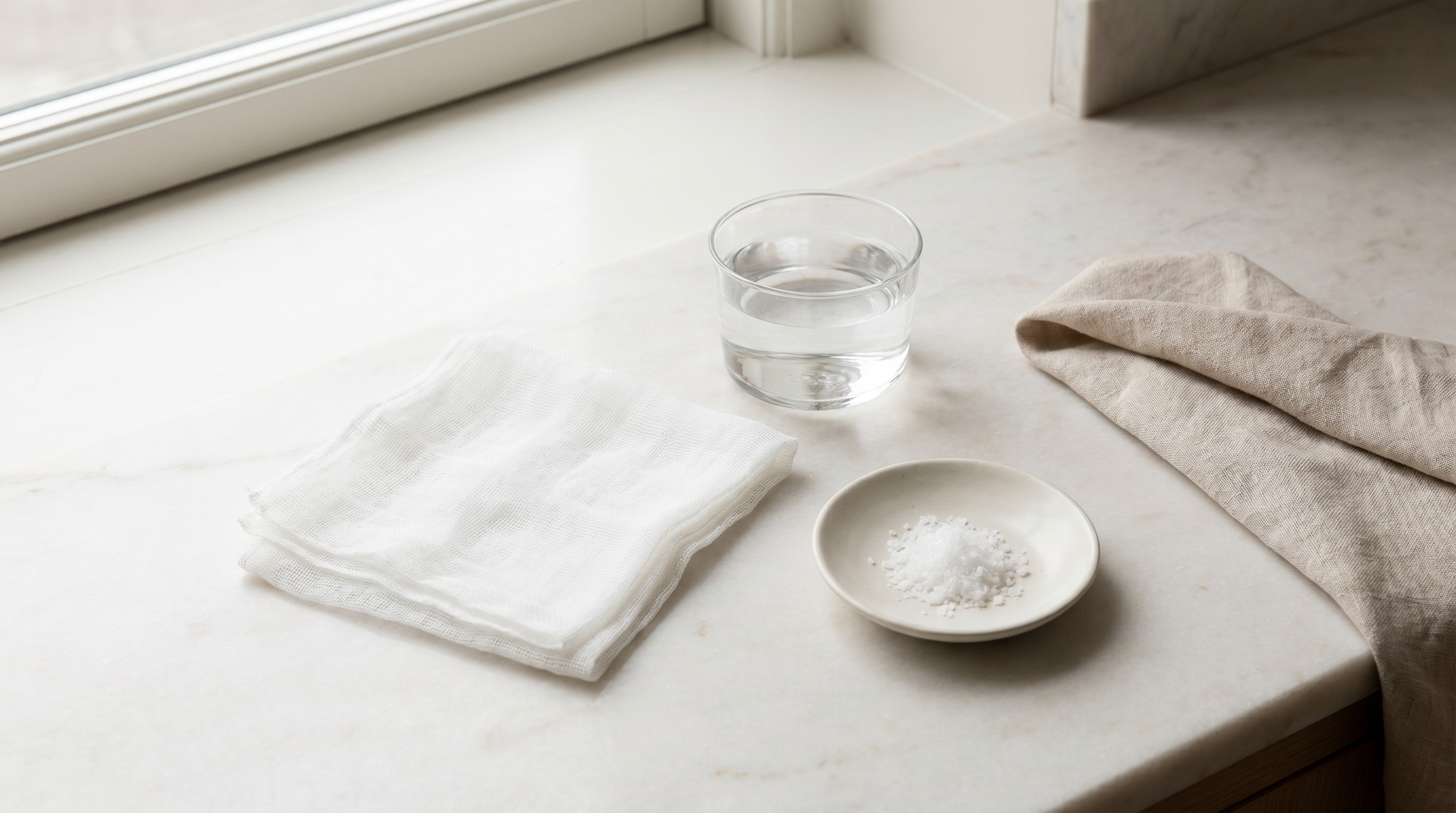
Rinse gently with cool water or a mild saline solution (half a teaspoon of salt in a cup of warm water). Skip mouthwash with alcohol. It stings and slows clotting.
Apply pressure with clean gauze or a folded paper towel directly against the bite for a full 10 minutes. No peeking. Lifting the gauze restarts the clock.
Use a cold compress on the outside of the cheek, 10 minutes on and 10 minutes off. Cold constricts vessels and limits swelling, which limits re-biting.
Avoid hot, spicy, salty, or acidic foods for the rest of the day. Citrus and tomato sauce will light up a fresh bite. Stick to lukewarm, soft foods.
Chew on the opposite side for a day or two so the swollen tissue can shrink back behind the bite line.
That handles the vast majority of cheek bites we see in Aloha, Beaverton, and Hillsboro families.
When a cheek bite is a true dental emergency
Call us, or seek urgent care, if any of these apply:
Bleeding continues past 15 minutes of firm, uninterrupted pressure.
The wound gapes open with visible separation of tissue edges. Deep lacerations with gaping edges may require sutures, according to AAOMS guidance.
You see a flap of tissue hanging loose, or a foreign object (tooth fragment, piece of food, broken filling) lodged in the wound.
The bite came from blunt trauma, not a simple chewing accident. A fall, a sports collision, a car incident. These often come with deeper injury beneath the surface.
Signs of infection appear 2 to 3 days later: fever, spreading swelling, pus, a foul taste, or a hard lump under the skin.
One scenario we see every fall. A student at Aloha High takes an elbow during basketball practice, bites through the cheek, and tries to tough it out. Two days later, the parent calls because the cheek is swollen and warm. That is no longer a simple bite. That is a wound that needs evaluation.
Healing timeline and when to call Line Dental Aloha
Most cheek bites heal within 3 to 7 days. AAOMS patient education notes that minor intraoral lacerations typically close on their own in that window. You will see a small white or yellow patch over the wound during healing. That is a fibrin layer, not pus, and it is a good sign.
Two longer-term issues we want to flag.
First, any oral ulcer or non-healing spot that lasts longer than two weeks needs a clinical look. ADA and Oral Cancer Foundation guidance recommend evaluation of persistent oral lesions to rule out other causes. We would much rather see you for nothing than miss something.
Second, if you keep biting the same spot, you may have an alignment issue or a small hyperplastic tissue tag (morsicatio buccarum) that keeps catching between your teeth. We can smooth a sharp cusp, adjust a high filling, or evaluate your bite. Patients ask us about this constantly. It is fixable.
Line Dental Aloha sits at 18425 SW Alexander St, right off TV Highway, easy to reach for families across the Beaverton School District and tech professionals commuting between the Intel and Nike campuses. For after-hours dental emergencies, call (503) 259-8641 and follow the prompts for urgent care guidance.
Frequently Asked Questions
Should I put ice directly on a cheek bite?
No. Apply cold to the outside of the cheek, not inside the mouth. Ice on raw mucosa can cause additional tissue damage and is uncomfortable. A cold pack wrapped in a thin towel against the outer cheek, 10 minutes on and 10 off, is the right approach for the first few hours.
Can a cheek bite get infected?
Yes, though it is uncommon because saliva has natural antibacterial properties. Watch for spreading swelling, fever, pus, or a foul taste 2 to 3 days after the injury. If you see any of these signs, call Line Dental Aloha at (503) 259-8641 for evaluation. Patients with diabetes or weakened immune systems should be especially cautious.
Why do I keep biting the same spot inside my cheek?
Usually because the first bite caused swelling, and swollen tissue sits closer to your bite line. Sometimes a sharp cusp, a tall filling, or an alignment issue keeps catching the cheek. If it happens repeatedly in the same spot, we can examine the area and adjust whatever is causing it. Simple as that.
Do cheek lacerations need stitches?
Most do not. Shallow bites heal on their own thanks to the mouth's rich blood supply and rapid tissue turnover. Deep lacerations with gaping edges, full-thickness wounds, or bites that go through the cheek from inside to outside may need sutures. If the wound edges do not come together naturally when you relax your face, get it evaluated.
Is it normal for a cheek bite to turn white?Yes. A white or yellowish film over a healing bite is fibrin, a natural protein scaffolding that forms during healing. It is not pus and does not need to be scrubbed off. If the white patch persists beyond two weeks, grows, or develops a hard border, schedule an evaluation.
If you are in Aloha, Beaverton, Hillsboro, or anywhere along the TV Highway corridor and you are not sure whether a mouth injury needs care, call Line Dental Aloha at (503) 259-8641. We would rather answer a quick question than have you worry through the weekend.
Schedule Your Visit Today
At Line Dental, we understand that patients may have many questions before scheduling an appointment or visiting our office. Below are answers to some of the most frequently asked questions. If you have additional inquiries, please feel free to contact us at 503-259-8641 or via our online form.